
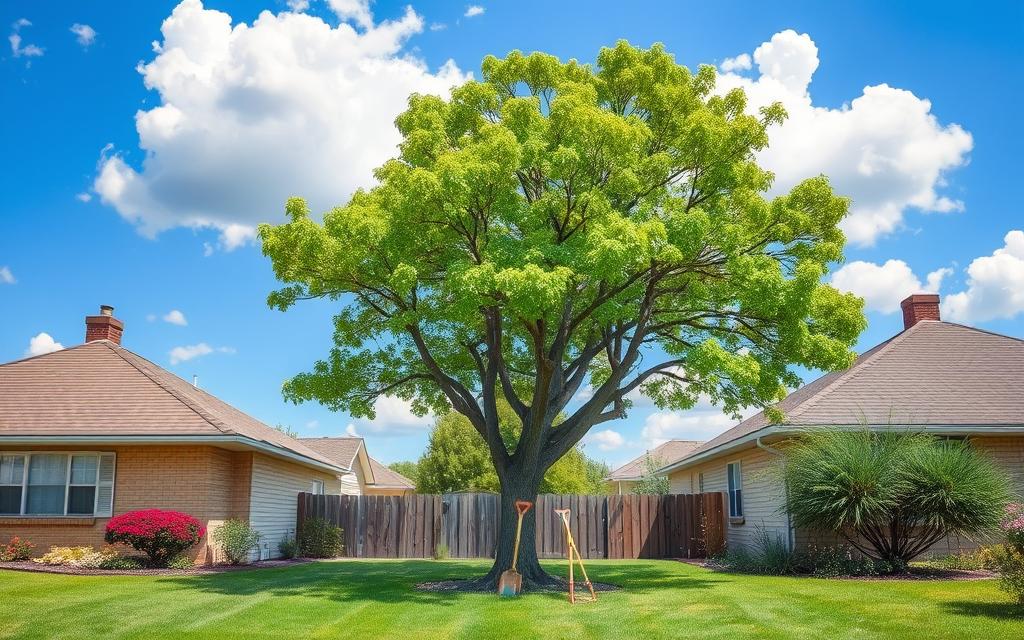
Did you know that about 30% to 50% of neighbor tree disputes turn into big legal fights? Laws about cutting down trees and property lines can make a simple issue very complicated. This can hurt how neighbors get along.
Dealing with a neighbor tree problem means knowing your rights and the rules about trees. Trees that grow on the line between properties can make solving the problem hard and expensive.
Local rules and laws are very important in solving tree problems. Each area has its own rules about cutting down, trimming, and taking care of trees. Owners must think about these rules before they do anything.
Key Takeaways
- Tree disputes can involve substantial financial risks
- Property line placement determines tree ownership rights
- Local ordinances play a critical role in tree management
- Communication is key in resolving neighborly tree conflicts
- Professional legal consultation may be necessary for complex disputes
Understanding Tree Ownership Rights
Tree ownership can be tricky. It involves complex property rights and laws. Knowing about tree removal law and property rights helps homeowners deal with tree disputes with neighbors.
Property lines are key in figuring out who owns a tree. If a tree’s trunk is on both sides of a property line, it’s shared property. This means both homeowners have to share the tree’s care and rights.
Property Line Determination
- Iron stakes mark property line corners
- Metal detectors help find property stakes (often under $60)
- Professional surveys give exact boundary info
Rights of the Tree Owner
Tree owners have legal rights under tree removal law. They can:
- Keep trees on their land
- Trim and care for their trees
- Stop others from removing or harming their trees
Neighbor’s Rights and Limitations
Neighbors have some rights about trees near their homes. FindLaw says neighbors can trim branches that cross their line. But, they can’t harm the tree’s health or enter private land without permission.
Talking things out is key in solving tree disputes. Almost 70% of neighbors fix tree issues by talking. This shows how important it is to understand and respect each other.
Common Reasons Neighbors Request Tree Removal
Tree ownership and legal tree removal can get tricky when neighbors disagree. Knowing why trees might need to be cut down helps avoid fights and keeps peace.
Overhanging Branches
Branches hanging over into another’s yard can be a big problem. In Ohio, neighbors can cut branches that reach over, but only up to the property line. These branches can:
- Drop leaves into swimming pools
- Block sunlight from gardens
- Pose safety risks
- Damage roofs or structures
Root Intrusion Issues
Tree roots can harm foundations, pipes, and gardens. Invasive root systems may create expensive repair challenges that lead to tree removal requests.
Blocked Views
Big trees can block views or sunlight, lowering property value. Homeowners might ask to cut down trees to improve their view and sunlight.
Safety Concerns
Dead or unstable trees are a big safety risk. Experts say to check trees often to avoid dangers. Trees with:
- Significant decay
- Large dead branches
- Unstable root systems
- Potential disease
should be removed to keep everyone safe.
Local Ordinance Impact on Tree Removal
Removing trees needs careful thought about local rules. Knowing the law is key for property care. Many disputes come from not knowing who owns the tree.
Local laws can make tree removal hard for homeowners. Each area has its own rules for trees.
City and County Regulations
Local rules can limit how you remove trees. Important things to know include:
- Permit needs for tree removal
- How close to property lines you can cut
- Rules for certain tree types
- Areas protected for trees
Zoning Laws
Zoning laws are very important for tree removal. About 30% of tree removal requests are denied because of local laws. It’s important to check local zoning rules before acting.
Homeowners Association Rules
Homeowners groups have their own rules for trees. These rules might be stricter than city laws. Getting legal help is a good idea when dealing with these rules.
Always talk to local officials and might need a lawyer to know the rules. Knowing the rules ahead of time can avoid problems with neighbors and the law.
Assessing Tree Damage and Liability
Knowing about tree damage and who’s to blame is key for homeowners. Tree problems can cause big money and legal issues. It’s important to think about who has rights and who might be at risk.
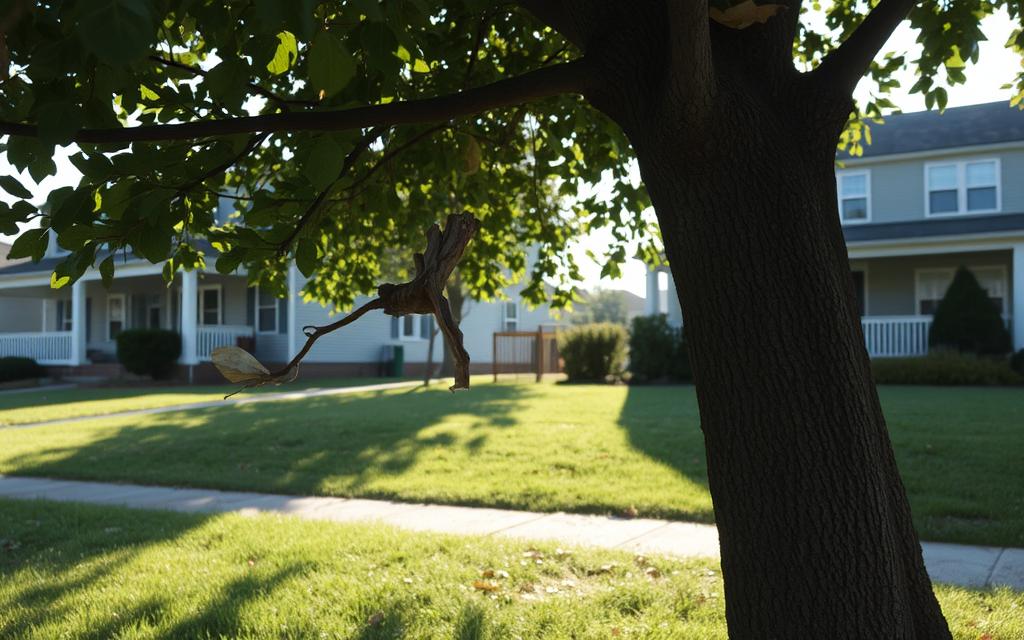
Tree trimming laws and property damage have a few main points to consider:
- Negligence in tree care
- Knowing about tree health risks
- Keeping records of tree condition
- Local rules about trees
Property Damage Claims
Damage from trees can lead to big legal problems. Homeowners might be blamed if they ignore tree dangers. Signs like broken branches or dead limbs show a tree might be a risk.
| Tree Condition | Liability Risk | Insurance Coverage |
|---|---|---|
| Healthy Tree | Low | Usually Covered |
| Unhealthy Tree | High | Insurance Might Not Cover |
Personal Injury Incidents
Claims for personal injury can happen from falling branches or unstable trees. Keeping trees healthy is key to avoid risks and show you care for your property.
Negligence Factors
Figuring out if someone was careless involves looking at a few things:
- Knowing about the tree’s state
- Not fixing known dangers
- Not getting trees checked by experts
- Ignoring warnings from neighbors
Getting trees checked by pros can stop big problems and lower the chance of being blamed. Homeowners should check their trees often and fix any problems right away.
Communication with Your Neighbor
Tree problems between neighbors can get worse fast if we don’t talk. Knowing about tree law helps avoid fights. Talking things out is the best way to solve tree issues.
Initial Discussions: Setting the Right Tone
When you talk to your neighbor about trees, be ready. This can stop fines and legal trouble. Here’s how to do it right:
- Schedule a face-to-face meeting
- Bring supporting documentation about the tree’s condition
- Explain your specific concerns without accusation
- Listen to your neighbor’s perspective
Documenting Conversations Professionally
Write down every talk about trees. This helps if you need to go to court.
| Documentation Method | Purpose |
|---|---|
| Written Correspondence | Create a formal record of discussions |
| Email Exchanges | Provide timestamped communication |
| Certified Mail | Ensure delivery and receipt of important notices |
Mediation: A Constructive Alternative
If talking doesn’t work, try mediation. Experienced mediators can help neighbors find solutions without going to court.
- Neutral third-party facilitates discussion
- Lower cost than litigation
- Preserves neighborly relationships
- Faster resolution compared to court battles
Most tree problems can be fixed by talking and listening to each other.
When to Consult Legal Advice
Dealing with neighbor conflicts and tree disputes can get very complicated. Knowing when to get legal help is key. It helps protect your property and keeps peace with your neighbors.
Situations Requiring Legal Intervention
Some tree issues need a lawyer’s help. You might need one if:
- Tree damage could cost over $3,000 to fix
- Your neighbor won’t fix a dangerous tree
- There’s a fight over who owns the trees on the boundary
- A tree is a safety risk to your property
- Talking to your neighbor isn’t working
Finding the Right Property Lawyer
Finding a good property lawyer takes thought. Look for ones who know a lot about real estate and solving property disputes.
Key Questions to Ask During Consultation
Make a list of important questions for your lawyer:
- What are my legal rights about the tree?
- What proof do I need for the dispute?
- What ways can we solve the problem?
- How much will legal help cost?
- How likely is it that we’ll win?
Legal fights over trees have gone up 20% from 2018. Knowing your rights is more important than ever. A lawyer can guide you through tough property issues.
Understanding Easements and Rights of Way
Property ownership can be tricky. You need to know about easements and rights of way. These rules help figure out how you can use and get to your land. Knowing about easements is key to handling legal tree issues and property lines.
Easements let someone use another’s land for a certain reason. About 25% of property problems come from easements or rights of way. This is why homeowners need to pay attention.
Definition of an Easement
An easement is a deal that lets someone use your land for a specific thing. There are two main kinds:
- Affirmative Easements: Give access to land for a certain use
- Negative Easements: Put limits on what you can do with your land
Types of Easements
It’s good to know about different easements. They can affect your tree cutting permits and how you manage your property:
- Utility Easements (make up 20% of all easements)
- Private Easements
- Prescriptive Easements
- Necessary Easements
Implications for Tree Ownership
Easements can really change how you deal with trees. Utility companies might cut down trees that block their lines or are dangerous. You might not be able to plant or keep trees in easement areas.
Also, about 30% of buyers don’t get easements before they buy. An easement can lower your property’s value by up to 15% in some places.
Responsibilities of Tree Maintenance
Tree care is key for property owners. It affects rights and can solve disputes. Owners must take care to avoid problems with neighbors and keep trees safe.
Regular Pruning and Care
Tree care is more than looks. It keeps trees healthy and safe. Experts say to check trees yearly to:
- Find health issues
- Remove dead branches
- Stop damage
- Check tree health
Liability for Falling Branches
Tree owners must watch out for damage. Regular care stops big legal fights. Owners might have to pay for:
- Damage from falling branches
- Injuries from tree falls
- Cleaning up after storms
- Helping neighbors
Seasonal Considerations
Seasons change, so tree care must too. In quiet times, trimming helps trees stay strong. Owners should keep records and check trees often to avoid risks.
Knowing local rules and talking with neighbors helps avoid tree problems. It keeps everyone’s property safe and healthy.
Tree Removal Process
Dealing with a neighbor tree dispute can be tough for homeowners. It’s important to know the legal rules and what to do practically. This helps when facing issues with property boundaries.
Professional vs. DIY Removal
Homeowners must decide between hiring pros or doing it themselves for tree removal. Hiring experts has many benefits:
- They know how to check the tree’s health
- They follow safety rules
- They use the right tools and methods
- They protect you from legal trouble
Trying to remove a tree yourself might save money. But, it’s risky. About 20% of DIY efforts lead to fines or legal issues.
Permits Required
Tree cutting laws differ by area. Over 50% of homeowners need to check local rules before acting. Trees near public areas might need special permits.
Associated Costs
Knowing the costs of tree removal is key in neighbor disputes. The price changes based on the tree’s size and where it is.
| Tree Size | Average Removal Cost | Potential Additional Expenses |
|---|---|---|
| Small Tree (under 30 feet) | $300 – $500 | Permit fees, disposal costs |
| Medium Tree (30-60 feet) | $500 – $1,000 | Potential property damage assessment |
| Large Tree (over 60 feet) | $1,000 – $1,500 | Complex removal, legal advice |
Pro tip: Legal costs can be much higher than removing the tree. They might be 1.5 to 3 times the removal cost.
Neighborly Disputes and Solutions
Tree disputes between neighbors can quickly get out of hand. It’s important to know how to solve these problems. This helps keep good relations and protects your property.
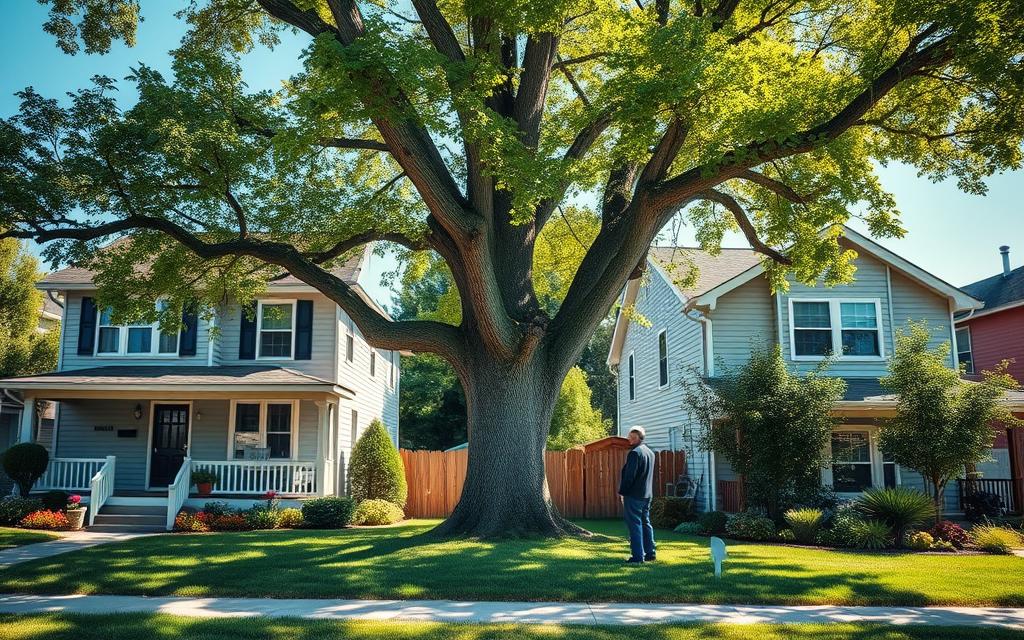
Informal Resolutions: Communication is Key
When you face tree issues, talking it out is the first step. Most problems can be fixed by just talking. About 70% of neighbor issues get solved this way.
- Schedule a calm, respectful discussion with your neighbor
- Clearly explain your specific concerns about the tree
- Listen to their perspective and possible solutions
- Propose compromise options that benefit both parties
Formal Complaint Processes
If talking doesn’t work, you might need to go to local authorities. They and mediation services can help solve tree disputes.
| Complaint Type | Action Steps |
|---|---|
| Nuisance Complaint | Document specific issues, contact local municipal authorities |
| Property Damage | Gather photographic evidence, obtain professional assessment |
| Safety Concerns | Request municipal inspection, provide detailed safety documentation |
When to Escalate the Issue
Tree disputes might need a lawyer if:
- Talking doesn’t work
- The tree is a big safety risk
- There’s a lot of property damage
- Your neighbor won’t agree to a fair solution
Pro tip: Always keep records of all talks and evidence before going to court. Talk to a local lawyer who knows about tree disputes. They can tell you what legal steps you can take.
Legal Action for Tree Disputes
Tree disputes can turn into big legal fights fast. It’s key to know the tree cutting rules for homeowners facing problems.
Types of Lawsuits in Tree Ownership Conflicts
There are many types of lawsuits for tree issues:
- Nuisance claims
- Property damage lawsuits
- Negligence suits
- Boundary dispute cases
Evidence Requirements for Legal Action
To win a tree-related lawsuit, you need good evidence:
- Photos of damage
- Property survey documents
- Reports from tree experts
- Maintenance records
Potential Lawsuit Outcomes
| Lawsuit Type | Potential Outcome | Typical Compensation |
|---|---|---|
| Nuisance Claim | Tree Removal/Trimming | Property Restoration Costs |
| Property Damage | Monetary Compensation | Repair Expenses |
| Negligence | Financial Settlement | Damages and Legal Fees |
Courts use a reasonable care standard in tree disputes. About 70% of neighbors try to solve issues without going to court. This shows how important talking things out is.
Exploring Alternative Solutions
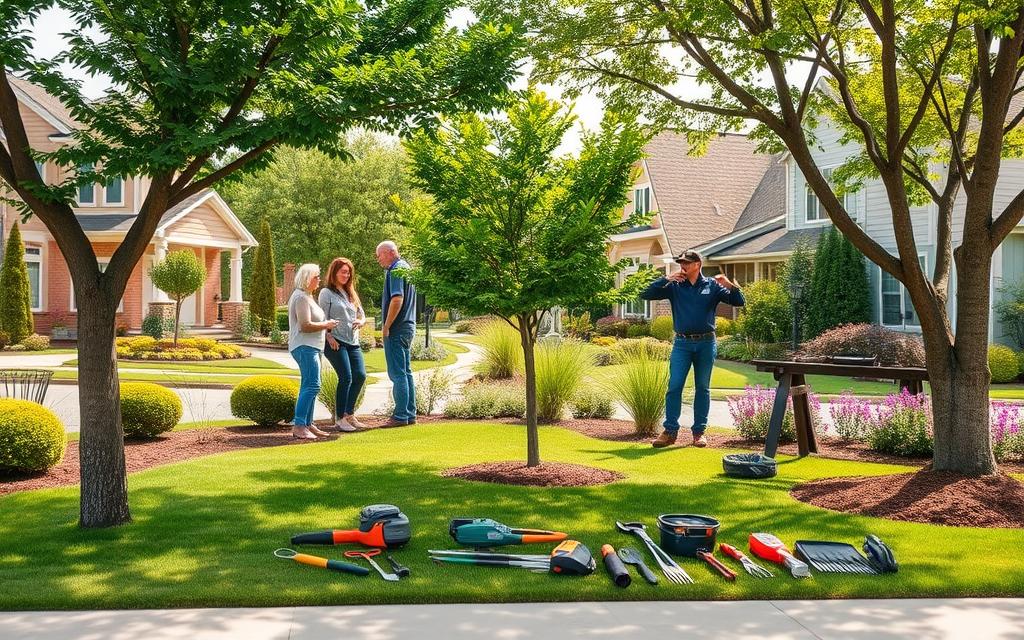
Dealing with tree disputes with neighbors needs smart thinking. You don’t always have to cut down the tree. There are ways to keep your yard looking good and stay friendly with your neighbors.
Trimming vs. Complete Removal
Trimming trees is a gentler way to fix problems. Experts say trimming carefully can solve issues without harming the tree.
- Trim branches crossing property lines
- Remove dead or diseased limbs
- Reduce tree height strategically
- Consult arborist for professional guidance
Landscaping Adjustments
Changing your yard can help with tree problems. Think about making areas that block views or redesigning your outdoor space to avoid conflicts.
| Landscaping Strategy | Potential Benefits |
|---|---|
| Root barriers | Prevent underground damage |
| Drainage improvements | Reduce root intrusion |
| Strategic planting | Minimize future conflicts |
Planting Considerations
When picking new trees, look at how they grow and their size. Planning ahead stops fights with neighbors and keeps your yard nice.
- Choose slow-growing species
- Consider mature tree size
- Maintain appropriate distance from boundaries
- Select native, non-invasive plants
Getting legal advice is helpful for tree problems. Talking things out and finding smart solutions can avoid expensive lawsuits.
FAQs on Tree Removal and Rights
Tree trimming laws and neighbor rights can be tricky. Knowing your rights helps avoid damage and fights with neighbors.
Many people wonder about trees on their land. Here are common questions about tree removal and rights:
Can I Remove a Tree on My Property?
Removing a tree depends on a few things:
- Local laws
- The tree’s health
- How it might affect neighbors
- Any conservation rules
What If the Tree Is Dead or Dying?
Dead or dying trees are dangerous. You should:
- Get advice from a Certified Tree Expert
- Get the right permits
- Keep records of the tree’s state
- Tell your neighbors
Preventing Future Tree Disputes
To avoid fights, try these tips:
- Keep your trees healthy
- Talk openly with your neighbors
- Know the local tree laws
- Manage your trees well
| Action | Potential Cost | Legal Considerations |
|---|---|---|
| Tree Removal | $200 – $2,000 | Permit Required |
| Arborist Consultation | $50 – $200/hour | Recommended |
| Property Value Impact | 7-15% Decrease | Tree Condition Matters |
Always think about safety, following the law, and being kind when dealing with trees.
State-Specific Laws on Trees
Tree laws change a lot from state to state. This makes it hard to know what to do with trees near your house. Knowing the local laws is key to avoid fights and keep peace with your neighbors.
Every state has its own rules about cutting down trees and caring for the environment. It’s very important to check the local rules before you do anything with trees near your property line.
State Regulation Variations
How states handle trees is very different. Some main differences include:
- Permit needs for cutting down trees
- Rules for trees right on the property line
- Fines for cutting down trees without permission
- Local rules that must be followed
Examples of State Tree Laws
Here are some examples of how tree laws vary:
| State | Unique Tree Law Characteristic |
|---|---|
| California | Strict rules for certain tree species |
| Texas | No state law for tree disputes with neighbors |
| Florida | Clear rules for trimming trees on the line |
Understanding Local Regulations
Local rules can really affect how you manage trees. A lot of neighborhood problems are about trees. It’s very important to know the environmental laws and local rules.
Local officials say to check zoning laws and follow municipal rules before cutting down trees. Breaking these rules can cost up to $5,000. So, it’s very important to do your research.
Final Thoughts on Tree Ownership and Neighbors
Dealing with neighbor issues and tree disputes needs care. Knowing your rights and keeping good relations is key. Tree rules can be tricky, but talking things out often avoids big problems.
Balancing Rights and Relationships
Tree ownership is more than just law. When a tree is on both sides of a line, everyone must work together. Knowing local rules and getting help from tree experts can stop fights before they start.
Importance of Open Communication
Talking about tree care with neighbors can stop wrong ideas. Getting help from pros like Harrison’s Pro Tree Service can solve problems early. They have a 4.9-star rating.
Future-Proofing Your Property
Good homeowners keep their trees in check and know the rules. Keeping records, getting expert advice, and respecting lines can avoid trouble. This keeps your property safe and valuable.
About the Author


