
Did you know over 90% of civil cases in the United States are solved through ADR methods? Arbitration and mediation are two main types. This guide helps you understand how they work to solve legal problems.
Legal disputes can be tough. Knowing the difference between arbitration and mediation is key. These methods help solve problems outside of court, saving time, money, and stress.
Arbitration and mediation have their own ways to tackle legal issues. They both aim to solve disputes but do it differently. The process, formality, and outcomes can greatly affect how conflicts are settled.
Key Takeaways
- ADR methods provide alternatives to traditional court litigation
- Arbitration and mediation offer different approaches to dispute resolution
- Understanding each method helps choose the most appropriate conflict resolution strategy
- Both methods can save time and reduce legal expenses
- The choice depends on specific dispute characteristics and desired outcomes
Introduction to Arbitration and Mediation
Dealing with conflicts is hard for people and companies. Arbitration and mediation are strong ways to solve problems outside of court. They are quick and don’t cost as much as long, expensive lawsuits.
Definition of Arbitration
Arbitration is a way to solve disputes with a neutral third-party. Experts look at the evidence and make final decisions. It’s faster and more private than going to court.
- Involves neutral arbitrators
- Produces legally binding decisions
- Typically faster than court proceedings
Definition of Mediation
Mediation is a team effort to solve problems. A neutral person helps both sides talk and find common ground. It’s different from arbitration because it focuses on talking and agreeing together.
- Encourages direct communication
- Promotes collaborative problem-solving
- Maintains relationship between parties
Importance of Dispute Resolution
Today, we need quick and affordable ways to solve conflicts. Arbitration and mediation are key to avoiding long, expensive court battles. They help people solve problems faster and better.
How Arbitration Works
Arbitration is a key legal option for solving disputes outside of courts. It’s a structured way to handle conflicts. This method is more flexible than traditional court systems.
When you start an Arbitration Process, you join a formal but quick legal process. It’s very different from regular court cases. This path offers a unique way to solve disputes.
The Arbitration Procedure
The arbitration process has several important steps:
- Initial complaint filing
- Arbitrator selection
- Preliminary hearing
- Evidence presentation
- Witness testimonies
- Final decision rendering
Arbitrator Responsibilities
Arbitrators are key in arbitration. They are neutral third-party decision-makers. They look at all the evidence and arguments to find a fair solution.
Decision Finality
Arbitration is known for its final decisions. Arbitration awards are usually binding. This means there are very few chances to appeal. It offers a fast and clear way to end disputes.
Choosing arbitration has many benefits. These include:
- Faster resolution than court trials
- More flexible rules
- Potential cost savings
- Confidentiality of the process
How Mediation Works
Mediation is a special way to solve problems. It’s a ADR dispute method that helps people work together. It’s different from regular court cases because it lets people find their own solutions.
Understanding the Mediation Process
The mediation process has a clear plan but can change as needed. It helps people talk and work things out. The main steps are:
- First, everyone talks about the rules.
- Then, each side shares their story.
- They explore what each side really wants.
- They start to solve problems together.
- They might write down an agreement.
The Mediator’s Crucial Role
A good mediator helps everyone in the room. They make sure everyone can talk without trouble. Their main jobs are:
- They make a safe place to talk.
- They help find common goals.
- They guide the conversation.
- They offer ideas for solving problems.
Non-Binding Nature of Mediation
Mediation is different from arbitration because it’s not forced. People can choose to stop at any time. This makes it a more flexible way to solve problems compared to other methods.
Key Differences Between Arbitration and Mediation
It’s important to know the differences between arbitration and mediation. This helps choose the best Alternative Dispute Resolution (ADR) strategy. The ADR Strategy Guide shows key differences that affect how disputes are solved.
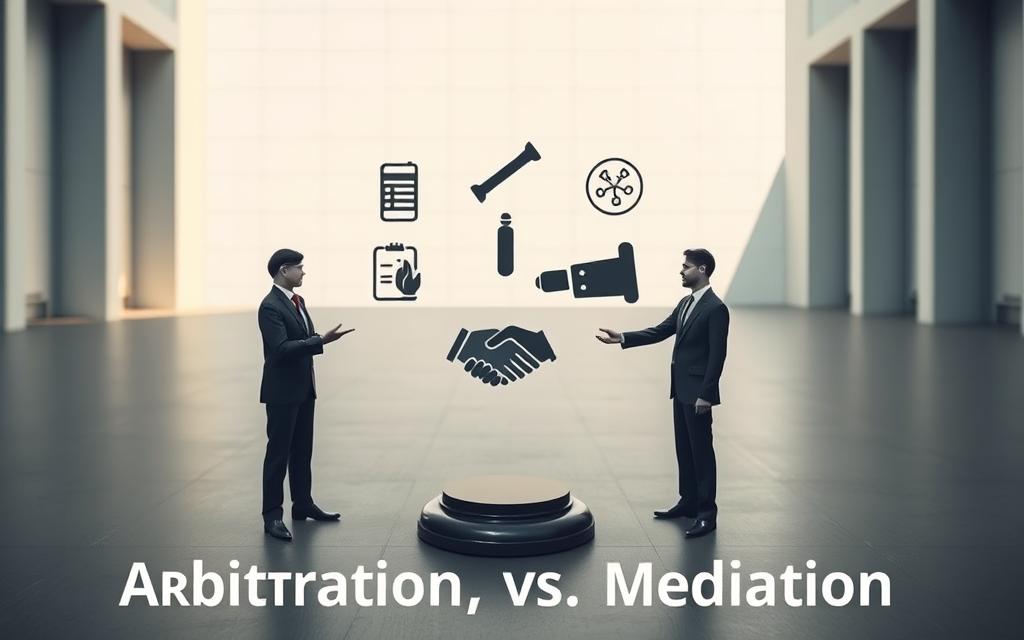
When deciding between arbitration and mediation, several important factors come up. These factors make each method different in solving disputes.
Legal Status of Decisions
The main difference is in the legal binding of decisions. Arbitration decisions are legally enforceable like court judgments. Mediation, on the other hand, leads to agreements that need both sides’ consent.
Outcome Control
- Arbitration: A third-party arbitrator decides the final outcome
- Mediation: The parties control the final agreement
Formality and Structure
| Characteristic | Arbitration | Mediation |
|---|---|---|
| Process Formality | High (Court-like proceedings) | Low (Collaborative discussion) |
| Decision Maker | Neutral Arbitrator | Neutral Facilitator |
| Outcome Predictability | High | Variable |
The Mediation vs Arbitration Summary says the right choice depends on the dispute. It also depends on what outcome you want and the relationship between the parties.
Advantages of Arbitration
Arbitration is a strong way to solve big disputes. It’s clear when to use it by seeing its benefits in settling legal issues.
Arbitration is fast and focused on solving problems in many areas. It has big advantages for groups and people.
Speed of Resolution
Arbitration is much quicker than going to court. It lets people:
- Fix disputes in weeks or months, not years
- Choose times for hearings that work for everyone
- Stay away from long court delays
Enforceability of Awards
Arbitration awards are very important legally. International conventions like the New York Convention make sure these decisions are followed in many places.
| Arbitration Award Characteristic | Key Benefit |
|---|---|
| Global Recognition | Easily enforced in multiple countries |
| Legal Binding Nature | Minimal grounds for appeal |
| Confidential Process | Protects sensitive business information |
Expertise of Arbitrators
Arbitration lets people pick experts in their field. This means complex issues are looked at by those who really get it.
- Choose arbitrators with industry-specific expertise
- Benefit from deep technical understanding
- Receive more informed and precise decisions
Advantages of Mediation
Mediation is a strong way to solve problems. It’s different from going to court. It lets people work together to find solutions they both like.
Flexibility in Crafting Solutions
Mediation is great because it lets people be flexible. It helps them:
- Create agreements that fit them
- Find new ways to solve problems
- Talk about feelings
- Get things done that courts can’t
Economic Benefits
Mediation is cheaper than going to court. It saves money because:
- It’s faster
- Needs less lawyer time
- Costs less for court
- Avoids long trials
Relationship Preservation
Mediation’s biggest plus is keeping relationships strong. It makes people talk better and understand each other. This helps them:
- Talk better
- See things from each other’s view
- Work together
- Feel less stressed
For both personal and work problems, mediation is a smart way to solve conflicts. It values respect and peace.
Disadvantages of Arbitration
The arbitration process has its challenges. It’s important to think about these before choosing it. Knowing its downsides is key.
Limitations in Evidence Gathering
Arbitration’s discovery process is limited. This can make it hard to get all the evidence needed:
- It’s hard to get detailed documents.
- There are fewer chances to hear from witnesses.
- Deeper investigations are less likely.
Unexpected Financial Burdens
Arbitration can be very costly. The fees for a third-party neutral and special proceedings add up fast:
- Arbitrator fees can be high.
- There are administrative costs.
- Expert witness fees can add up.
Restrictive Appeal Options
Arbitration’s binding nature means appeal options are very limited. This can lead to unfair outcomes.
Key takeaway: Arbitration is a fast way to solve disputes. But, its downsides must be weighed against its benefits.
Disadvantages of Mediation

Mediation is a cost-effective way to solve disputes. But, it has its downsides. Knowing these helps people make better choices about how to settle their issues.
Non-Binding Outcomes Challenge
Mediation’s non-binding nature can be very uncertain. If no agreement is reached, it feels like starting over. This can cause:
- Wasted time and resources
- Increased frustration between disputants
- Potential escalation to more formal legal proceedings
Power Dynamics in Mediation
Confidentiality in mediation doesn’t always mean fair talks. Inherent power imbalances can affect the talks. One side might have:
- More financial power
- More legal knowledge
- Stronger negotiation skills
Cooperative Engagement Requirements
Mediation works best when both sides are willing to compromise. If one side is too rigid or doesn’t want to work together, it’s hard. Success depends on:
- Mutual respect
- Open communication
- Genuine desire to resolve conflicts
Even though mediation is appealing, it’s important to think about your situation and challenges before choosing it.
When to Choose Arbitration
Arbitration is a strong way to solve big problems when normal lawsuits don’t work. It’s part of Business ADR options that help fix issues quietly and quickly.
Knowing when to pick arbitration can really help solve tough problems in many areas.
Types of Disputes Perfect for Arbitration
Some problems are better solved with arbitration. Here are some examples:
- International business deals
- Technical contract issues
- Intellectual property fights
- Construction site problems
Business Disputes Ideal for Arbitration
Business fights need special ways to get solved. Arbitration is great for company problems because:
| Dispute Type | Arbitration Benefits |
|---|---|
| Partnership Fights | Private and expert help |
| Contract Breaks | Fast and expert |
| Merger Fights | Private and expert panel |
Employment Conflict Resolution
Workplace fights often use arbitration for quick and private fixes. Common issues include:
- Wrongful firing claims
- Discrimination claims
- Pay disputes
- Contract meaning fights
Choosing arbitration wisely helps companies protect themselves. It keeps things professional and private.
When to Choose Mediation
Dealing with conflicts needs smart planning. Mediation is a strong way to solve tough problems. It helps people understand each other better.

Choosing between mediation and arbitration depends on the situation. Mediation works best when keeping relationships strong is key.
Ideal Situations for Mediation
Some problems are better solved through talking together. These include:
- Workplace disagreements
- Interpersonal conflicts
- Relationship-sensitive negotiations
Family Law Disputes
Family law is a great area for mediation. Divorce, child custody, and inheritance talks often get better results through talking.
Community Conflict Resolution
Local issues need careful handling. Mediation offers a way to solve neighborhood problems. It helps keep talks respectful and finds lasting solutions.
Mediation turns arguments into chances for growth. It’s a key part of solving disputes today.
The Role of Legal Counsel
Legal disputes need smart legal advice. Lawyers help clients know their choices and keep their rights safe.
Importance of Legal Representation in Arbitration
Arbitration is more formal. Lawyers are key by:
- Getting all case details ready
- Building strong legal points
- Showing evidence well
- Knowing all the rules
Benefits of Legal Guidance in Mediation
Even though mediation is less formal, lawyers are very helpful. They give strategic help without taking over the talks.
| Legal Support Area | Arbitration Role | Mediation Role |
|---|---|---|
| Case Preparation | Comprehensive legal strategy | Focused negotiation guidance |
| Client Advice | Detailed legal interpretation | Rights and possible outcomes |
| Process Management | Strict procedural adherence | Flexible communication support |
Choosing the right lawyer can really help in solving disputes. They give smart and tailored advice for each case.
Common Misconceptions
Many people don’t understand arbitration and mediation well. They think these are the same as going to court. This makes them miss out on good ways to solve disputes.
Arbitration: Not Just a Mini-Courtroom
Some think arbitration is just like a mini-court. But it’s really different:
- It’s less strict than court
- It’s faster
- The rules are more flexible
- It’s private and keeps things confidential
Arbitration is a special way to solve problems. It’s not as scary as court. Trained people help make sure it’s fair.
Mediation: Structured Flexibility
Some think mediation is very loose. But it has a clear plan:
- It’s led by experts
- It has a set way of talking
- It helps people work together
- It keeps things clear and on track
Mediators use special ways to help people talk. This way, everyone gets to share their views and find solutions together.
Costs of Arbitration vs. Mediation
It’s important to know the costs of different ways to solve disputes. Arbitration and mediation have big price differences.
Arbitration costs more because it’s a more detailed process. The costs add up because of:
- Arbitrator fees
- Administrative expenses
- Legal representation
- Expert witness costs
Breaking Down Arbitration Expenses
In arbitration, you might spend a lot of money. Arbitrators charge by the hour, from $200 to $1,000. Which Is Better Arbitration Or Mediation depends on your budget and the dispute’s complexity.
Mediation Cost Considerations
Mediation is cheaper. Mediators charge less, and most cases are solved in one day. The big advantages are:
- Shorter proceedings
- Less need for lawyers
- Low admin costs
- Flexible solutions
Choosing the best option depends on your specific case. Arbitration might seem pricey, but it’s good for complex legal issues.
Best Practices for Preparing for Arbitration
Getting ready for arbitration is key. It needs smart planning and a deep understanding of ADR Strategy Guide. This is how you solve legal conflicts well.
Good preparation has many steps. These steps can really change how your arbitration goes.
Gathering Complete Evidence
Building a strong evidence plan is vital. Here are important steps:
- Find all important documents
- Get statements from witnesses
- Get reports from experts
- Put evidence in order
Picking the Right Arbitrator
Choosing the right arbitrator is very important. Look at these key points:
| Criteria | Importance |
|---|---|
| Professional Expertise | High |
| Industry Knowledge | Critical |
| Neutral Background | Essential |
| Conflict of Interest Check | Mandatory |
Arbitrators with special skills help solve tough disputes. Choosing wisely means a fair and smart hearing.
Using these strategies can make your arbitration better. It can also lead to a good outcome.
Best Practices for Preparing for Mediation
Getting ready for mediation takes careful steps and smart thinking. It’s all about setting up well and finding ways to solve problems.
There are important steps to take before mediation. These steps can really help you get a good outcome. Knowing these steps can lead to a better solution.
Setting Clear Goals
First, you need to know what you want. Here are some things to do:
- Know what you really want and what you need
- Choose what’s most important to you
- Think about what you can really get
- Be ready to change your plan if needed
Selecting the Right Mediator
Finding the right mediator is key. Look for these things:
- Do they know a lot about your kind of problem?
- Are they fair and good at talking?
- Do they know a lot about your topic?
- Have they helped solve problems before?
The best mediators are neutral and great at talking. They help everyone understand each other without pushing their own ideas.
Go into mediation ready to listen and work together. Being prepared, knowing what you want, and picking the right mediator can turn tough problems into chances for solving them together.
Case Studies: Successful Arbitration and Mediation
Looking at Arbitration Mediation Examples shows us how ADR works in real life. It helps us see how Legal Dispute Resolution Comparison solves big legal problems. These stories show how arbitration and mediation work in different situations.
Arbitration and mediation have their own ways of solving conflicts. Here are some examples of how they work in different cases.
Corporate Dispute Resolution Breakthrough
A big tech company used arbitration to solve a tricky intellectual property issue. This method helped a lot because it:
- Used special technical knowledge
- Kept things private
- Was faster than court
- Found a solution both sides could agree on
Family Mediation Success Story
A tough fight over inheritance between siblings showed how mediation works. It helped a lot because it:
- Reduced emotional fights
- Helped everyone work together
- Was cheaper than court
- Kept the family together
Comparative Resolution Effectiveness
| Resolution Method | Time Taken | Cost Efficiency | Relationship Preservation |
|---|---|---|---|
| Arbitration | 3-6 months | Moderate | Limited |
| Mediation | 1-3 months | High | Excellent |
These stories show how arbitration and mediation solve legal problems in different ways.
Conclusion: Choosing the Right Method
Choosing between arbitration and mediation is not easy. It depends on many things. Knowing the differences helps pick the best method for each case.
When deciding how to solve a problem, think about what you want. Arbitration is good for a final decision by experts. Mediation is for working together to find a solution.
Think about what matters most to you. Do you want to keep the relationship? Or do you need a quick and cheap solution? Legal advice can help make the right choice.
Understanding each method’s good and bad points is key. By looking at your situation and talking openly, you can pick the best way to solve your problem.
About the Author