

Imagine walking into a store to buy a basic tool like a lighter, only to face unexpected age restrictions. While matches and fire-starting devices seem commonplace, legal requirements surrounding their purchase remain surprisingly nuanced across the United States.
Federal guidelines recommend a baseline age for acquiring flame-producing items, but state laws and retailer policies often diverge. For example, novelty lighters or USB-powered models may carry stricter rules than traditional pocket lighters. Brands like Zippo also enforce unique verification processes at checkout.
This patchwork of regulations creates confusion. Some states align with federal suggestions, while others impose higher thresholds or exempt specific lighter categories. Retailers frequently add their own safeguards, such as ID checks for customers who appear under 30.
Understanding these layers matters for both consumers and sellers. Whether you’re purchasing a standard lighter or a windproof model, confirming local statutes prevents legal complications. Always review your state’s fire safety codes before completing any transaction.
Key Takeaways
- Federal recommendations set a minimum age, but states enforce varying limits
- Retailers often implement stricter policies than required by law
- Specialty lighters (windproof/USB) may have unique age requirements
- ID verification practices differ between physical stores and online platforms
- Always confirm local regulations before attempting a purchase
Overview of Lighter Age Regulations in America
Fire-starting tools like lighters sit at the intersection of accessibility and public safety. Federal guidelines treat them as tobacco-related items, creating baseline rules for sellers nationwide. However, individual states layer additional restrictions based on local priorities and risk assessments.
Purpose and Scope of Lighter Laws
Regulations primarily aim to reduce fire hazards and limit minors’ access to ignition sources. Federal law prevents retailers from selling certain lighter types to those under 18. States like California and Texas extend these age limits for novelty or high-powered models.
Key Factors Influencing Regulations
Three elements shape lighter laws: accident prevention, vandalism reduction, and youth protection. States with higher wildfire risks often enforce stricter rules. Retailers may also implement ID checks beyond legal mandates to avoid penalties.
These variations mean a purchase legal in Nevada could violate Arizona statutes. Always verify regional restrictions before acquiring lighters, especially specialty designs. Understanding these layers helps consumers navigate transactions responsibly.
how old do you have to be to buy a lighter: Examining the Law
Navigating the legal landscape of lighter purchases reveals a complex interplay between federal standards and state-level mandates. The Consumer Product Safety Commission sets baseline terms, prohibiting sales to individuals under 18. Yet regional statutes frequently introduce stricter requirements, creating a patchwork of rules across jurisdictions.
Federal Guidelines versus State Rules
Federal law classifies lighters as fire-producing devices, mandating age verification for standard models. However, states like California and New York enforce higher thresholds for specialty items. Windproof or torch-style lighters often face 21+ requirements in these regions due to increased fire risks.
Retail policy adaptations further complicate compliance. Major chains frequently implement universal ID checks, regardless of local statutes. This practice addresses varying state definitions of “novelty lighters” and prevents accidental violations during transactions.
| Jurisdiction | Standard Lighter Age | Specialty Model Rules |
|---|---|---|
| Federal | 18+ | No distinction |
| California | 18+ | 21+ for torch lighters |
| Texas | 18+ | No extra restrictions |
These discrepancies create unique use cases for consumers and retailers. Gas station attendants might refuse sales based on corporate policy, even when local laws permit them. Always verify both legal terms and store-specific protocols before attempting purchases.
State-by-State Variations and Retailer Policies
Regional laws create a checkerboard of requirements for purchasing flame-producing items. While federal guidelines suggest 18 as the baseline age, enforcement differs dramatically across state lines.
Examples from Different States
California enforces a 21+ rule for torch-style lighters, while Ohio sticks to the 18+ standard. Texas treats all lighter types equally under state law but allows retailers to set stricter policies. These variations often tie to local priorities like wildfire prevention or youth safety campaigns.
Price also plays a role. High-end items costing over $50 frequently trigger extra ID checks, regardless of legal mandates. Gas stations near college campuses often implement universal age verification to avoid fines.
Differences in Local Store Practices
Major chains like Walmart use standardized protocols, but independent stores exercise more discretion. Some require ID for all customers under 30, while others only check for obviously underage buyers. Online retailers face unique challenges, with many using third-party verification systems during checkout.
Corporate policies frequently override state minimums. A convenience store chain might prohibit lighter sales to anyone under 21 nationwide, even in states allowing 18+ purchases. Always confirm both local laws and specific store rules before attempting transactions.
Understanding Federal Guidelines and Their Limitations
Federal lighter regulations establish a nationwide framework while recognizing state authority. The baseline requires purchasers to be at least 18 years old, addressing fire risks linked to unsupervised minors. These age restrictions aim to balance accessibility with public safety concerns.

Jurisdictional boundaries create enforcement challenges. Federal agencies set minimum standards but lack authority over localized rules. States often expand protections, like banning novelty lighters or requiring ID scans for all buyers under 25.
| Regulatory Body | Minimum Age | Jurisdiction Scope | Limitations |
|---|---|---|---|
| Federal | 18 | National baseline | No power over state laws |
| State | 18-21 | Regional enforcement | Varied definitions of restricted items |
Gaps emerge when federal guidelines conflict with regional priorities. For example, windproof lighters might face no federal age restrictions but get banned in wildfire-prone states. Retailers sometimes struggle with overlapping jurisdiction rules during transactions.
These limitations highlight why checking local laws remains essential. While federal rules prevent sales to minors, states refine policies based on community needs. Always confirm requirements before acquiring fire-starting tools.
Retailer Policies and Sale Restrictions
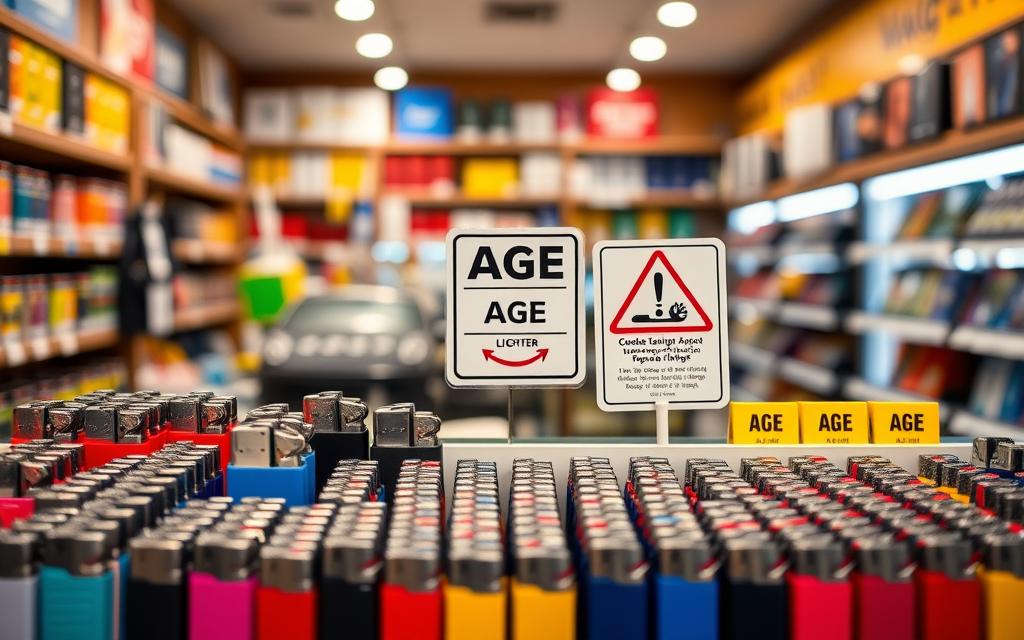
Store checkout counters and digital shopping carts both present unique challenges when purchasing flame-producing devices. Retailers frequently implement policies exceeding legal minimums to mitigate liability risks. These protocols vary widely between neighborhood shops and national chains.
In-Store Policy Variances
Physical stores often set age verification rules based on location and product type. Some check IDs for all customers under 30, while others only scrutinize sale lighters during promotions. Corporate chains typically standardize procedures, but independent shops might adjust requirements by time of day or staff discretion.
Online Retailer Practices and ID Checks
Digital platforms face heightened scrutiny for age verification. Reputable websites use encrypted systems confirming buyer eligibility while protecting privacy. Third-party services often cross-reference public records and payment methods in real time.
| Platform Type | Verification Method | Data Handling |
|---|---|---|
| Marketplaces | Automated age gates | Encrypted temporary storage |
| Specialty Retailers | Manual ID uploads | 72-hour deletion policies |
Seasonal promotions for sale lighters sometimes trigger extra verification steps. Both physical and digital sellers prioritize privacy compliance, particularly when handling sensitive customer information during website transactions.
Safety Considerations: Preventing Accidental Fires and Misuse
Flame-producing tools demand respect and awareness to prevent devastating consequences. Regulatory agencies and retailers prioritize safety measures because improper use leads to over 8,000 residential fires annually. These incidents often stem from mishandling by individuals unaware of basic protocols.
Potential Risks and Accidental Fires
Unattended lighters cause 37% of fire-related injuries among children under five. Retailers implement child-resistant designs as one answer to this problem. Experts recommend storing these devices in locked containers away from curious hands.
Three core factors drive strict policies:
- Legal liabilities for businesses selling to underage users
- Public health risks from unsupervised flame access
- Financial penalties exceeding $10,000 per violation
The reason behind rigorous training for store employees becomes clear when examining wildfire statistics. California alone attributes 12% of brush fires to improperly discarded lighters. Proper handling works by reducing ignition risks through education and accountability.
Parents and guardians play a critical role in protecting people from harm. Many states require safety demonstrations during purchases, especially for high-powered models. Always confirm the legal purchasing age to ensure compliance with regional fire codes.
Educating Youth on Lighter Safety and Responsibilities
Proper education transforms fire-starting tools from hazards to responsibly managed resources. Clear information helps young people understand lighter mechanics and consequences of misuse. Brands like Zippo lead by example, incorporating safety tutorials into their product packaging and museum exhibits.
Guidelines for Teaching Lighter Safety
Start with hands-off demonstrations using transparent containers to show flame behavior. Experts recommend these steps for home education:
- Store product in locked cabinets after use
- Explain heat transfer through safe experiments
- Role-play emergency scenarios
Fire departments and manufacturers offer conflicting views on ideal training ages. While some advocate starting at 12, others suggest waiting until 16. Zippo‘s safety workshops use age-appropriate materials, teaching older teens maintenance skills like wick trimming.
| Source | Educational Method | Focus Area |
|---|---|---|
| Fire Departments | Community drills | Property protection |
| Manufacturers | Instructional videos | Device mechanics |
| Schools | Science curriculum | Combustion principles |
Parents should reinforce that lighters serve specific purposes – not toys. Regular discussions about fire consequences help prevent unauthorized use. Always pair practical training with clear explanations of legal and ethical responsibilities.
Navigating Online Lighter Purchases
Digital marketplaces have transformed how fire-starting tools reach customers, creating new compliance challenges. Major platforms like Amazon use layered verification systems to meet legal standards while streamlining transactions.
Age Verification on Digital Platforms
E-commerce sites deploy multiple methods to confirm buyer eligibility:
| Method | Process | Reliability |
|---|---|---|
| Credit Card Checks | Validates cardholder age through issuer data | High |
| ID Scans | Analyzes government-issued documents | Very High |
| Biometric Analysis | Estimates age via facial recognition tech | Moderate |
These systems address the core question of legal responsibility. Reputable platforms store verification data for 72 hours before deletion to balance compliance and privacy.
International Purchase Considerations
Cross-border transactions introduce complexity. While U.S. sites follow federal guidelines, international sellers often operate under different rules:
| Region | Age Minimum | Common Verification |
|---|---|---|
| European Union | 18+ | GDPR-compliant ID scans |
| Australia | 16+ | Credit card checks |
| Canada | 18+ | Database cross-references |
Customers should always check a platform’s terms before completing international orders. Clear answers about regional policies prevent shipment delays or canceled transactions.
Three steps ensure smooth digital purchases:
- Use payment methods matching your legal name
- Enable two-factor authentication
- Review order confirmation emails for compliance notices
These practices help customers navigate the evolving landscape of online fire tool sales responsibly.
Legal Implications of Selling to Minors
Retailers face severe penalties when selling fire-starting tools to underage buyers. Federal regulations set clear boundaries, but state laws amplify consequences for violations. A single improper sale could trigger fines exceeding $10,000 or license suspensions.
Potential Liabilities for Retailers
Businesses risk civil lawsuits if minors misuse products obtained through illegal sales. California imposes $500 fines per violation, while New York mandates employee retraining programs. Specialty items like torch lighters often carry doubled penalties due to increased fire risks.
State-Specific Legal Requirements
Local statutes dictate acceptable verification methods and penalty structures. Texas requires two forms of ID for novelty lighter purchases, whereas Florida accepts digital licenses. These differences create compliance challenges for national chains.
| State | Minimum Fine | Restricted Products |
|---|---|---|
| California | $500 | Torch lighters |
| Illinois | $300 | USB rechargeables |
| Pennsylvania | $750 | Windproof models |
Legal author Michael Torres notes: “Retailers increasingly face class-action suits when multiple violations occur.” Common questions focus on employee training requirements and acceptable ID types. Always consult state-specific regulations before stocking restricted products.
Conclusion
Age verification for lighters varies significantly across different jurisdictions. Federal guidelines set baseline standards, but your legal place of residence determines specific requirements. Always confirm regional statutes before purchasing fire-starting tools.
Key differences emerge between state laws and retailer policies. Some locations enforce stricter age limits for specialty models, while others focus on universal ID checks. Reach out to members of local regulatory agencies or trusted stores for location-specific guidance.
Consumers should proactively contact authorities when uncertain about compliance rules. Retail staff and fire safety offices provide clarity on current restrictions. This due diligence prevents unintended violations.
Remember: Minimum age thresholds exist to promote responsible use. Whether you’re 18 or 21 years old, understanding these layers of regulation ensures lawful transactions. Stay informed, verify often, and prioritize safety in every purchase.
About the Author