
Is managing someone else’s finances a labor of love or a paid profession? The answer might surprise you. Conservators play a critical role in protecting vulnerable individuals’ assets, but compensation varies widely depending on their role and relationship to the conservatee.
Family members often serve as conservators without financial compensation, prioritizing care over income. In contrast, private professionals typically earn hourly wages approved by the court. These payments come directly from the conservatee’s estate, ensuring accountability through strict oversight.
Average earnings range significantly based on location, experience, and case complexity. Some states report median hourly rates between $25 and $45, while annual salaries can reach $60,000 for full-time professionals. Courts meticulously review expenses to prevent misuse of funds, requiring detailed documentation for every transaction.
Beyond base pay, conservators may need surety bonds to protect the estate from mismanagement. Reimbursements for necessary expenses like travel or legal fees also factor into total compensation. Understanding these variables helps families make informed decisions when appointing a conservator.
Key Takeaways
- Family conservators usually serve without pay, while professionals receive court-approved hourly rates
- Compensation comes from the conservatee’s estate under judicial supervision
- Payment structures often include expense reimbursements and bonding requirements
- Geographic location significantly impacts earning potential
- Courts ensure financial accountability through rigorous documentation checks
Understanding Conservatorship and Its Role
When courts determine someone cannot manage their personal or financial affairs, conservatorship provides legal protection. This process appoints a responsible party to make decisions while safeguarding the individual’s rights and resources.
Roles and Responsibilities
A conservator’s primary duty involves managing the conservatee’s assets and daily needs. Tasks include paying bills, arranging medical care, and overseeing property. Detailed financial records must be submitted to the court annually.
Personal welfare decisions also fall under their responsibilities. This might involve choosing housing options or approving medical treatments. Every action must prioritize the conservatee’s best interests.
Types of Conservators
Family members often serve voluntarily, focusing on care rather than payment. They typically handle smaller estates without formal compensation.
Private conservators from legal firms or trust companys work professionally. Courts approve their hourly rates, which the conservatee’s funds cover. Strict audits ensure transparency in all transactions.
Both types must follow state laws and reporting standards. This structure ensures accountability, whether the role is familial or professional.
How much does a conservator get paid
Compensation structures for conservators vary significantly depending on their role and payment model. Private professionals typically operate under court-approved arrangements, while family members often prioritize stewardship over financial gain.
Hourly vs Annual Compensation
Hourly rates dominate private conservatorship agreements, ranging from $50 to $150 based on expertise. Courts review these figures carefully, ensuring charges align with local standards and the conservatee’s estate can sustain payments.
Annual earnings often reflect accumulated hourly work. Full-time professionals might earn $30,000 to $60,000 yearly, depending on case complexity and hours logged. Precise time tracking proves critical, as courts audit records to verify appropriate pay calculations.
Family conservators rarely receive formal salaries but may claim expense reimbursements. These require court approval and documentation like receipts or mileage logs. In contrast, private appointees follow structured billing processes tied to measurable outcomes.
The compensation process demands transparency. All payments flow through supervised estate accounts, with judges reviewing quarterly reports. This system protects vulnerable individuals while ensuring conservators receive fair compensation for their time.
Factors Influencing Conservator Salaries
Determining a conservator’s earnings isn’t straightforward—it hinges on several critical elements. Courts evaluate multiple variables when approving compensation, creating distinct pay structures across cases.
Experience and Responsibilities
A conservator’s experience directly impacts their earning potential. Professionals handling complex estate management or medical decision-making often command higher rates. California courts, for instance, allow compensation up to 5% of managed assets for seasoned fiduciaries.
Expanded duties like overseeing business operations or resolving legal disputes typically justify increased hourly rates. Detailed financial logs become essential—Virginia requires comprehensive reports to validate payment requests. Missing documentation can forfeit compensation entirely.
Location and Court Guidelines
Geographic location creates significant pay variations. Urban areas like Los Angeles approve $150/hour rates for specialized roles, while rural regions might cap fees at $75. State-specific rules further shape approvals—California’s Rule 7.756 considers local standards, whereas Virginia uses fixed percentage schedules.
These regional differences prompt important questions during conservator selection. Understanding local benchmarks helps families anticipate costs while ensuring fair compensation for responsible estate management.
Comparing Family vs Private Conservator Compensation
Choosing between family and professional conservators dramatically shapes financial outcomes. This decision determines whether estate funds remain preserved or gradually diminish through service fees.

Family Conservatorship Considerations
Relatives often serve without formal pay to protect their loved one’s resources. Their role focuses on stewardship rather than income generation. Courts typically waive compensation requirements for family members handling basic responsibilities like bill payments or medical coordination.
Private Conservator Payment Structures
Professional fiduciaries from trust companies operate under court-mandated hourly rates. These fees range from $50-$150 depending on case complexity, directly reducing the conservatee’s estate value. Annual costs can exceed $60,000 for full-time management.
| Factor | Family Conservator | Private Conservator |
|---|---|---|
| Compensation Source | Typically unpaid | Estate funds |
| Payment Structure | Expense reimbursements only | Hourly + administrative fees |
| Oversight Level | Basic reporting | Detailed audits |
| Impact on Estate | Minimal depletion | Significant reduction |
Families in Texas recently saved $28,000 annually by appointing a relative instead of a professional service. However, complex cases requiring legal expertise often justify private management despite higher costs. Courts maintain stricter documentation rules for paid conservators to prevent financial abuse.
Conservatorship Costs and Surety Bonds
Navigating conservatorship expenses requires understanding both visible and hidden costs. Initial filings in states like California carry $435 court fees, while ongoing requirements like annual accountings demand financial precision. These expenses protect vulnerable individuals but steadily reduce estate values.
- Court-mandated fees: Filing charges, investigator assessments ($650+), and bond premiums
- Professional services: Legal counsel charging $300-600 per hour
- Administrative overhead: Accounting support and document preparation
Surety bonds act as financial safeguards, typically costing 0.5%-1% of the protected amount annually. A $500,000 estate might pay $2,500-$5,000 yearly through a bonding company. Courts require this insurance to recover funds if mismanagement occurs.
Transparent record-keeping proves critical. One California case showed 12% estate reduction within two years due to combined legal fees and bond costs. Regular audits ensure expenses align with court-approved budgets, protecting both conservatees and appointed managers.
Families should anticipate these deductions when planning long-term care strategies. Proper expense tracking helps maintain estate viability while fulfilling legal obligations effectively.
Salary Insights by Geography and States
Geographic location plays a pivotal role in determining conservator earnings across the United States. Compensation fluctuates based on local court policies, economic conditions, and demand for fiduciary services.
North Carolina and Other Leading States
North Carolina stands out with conservators earning $47,300 per year on average—25% above the national median. California follows closely at $44,120, while Texas professionals average $38,900 annually. These figures reflect regional demand for managing complex assets and estates.
Midwestern states like Nebraska show lower averages near $34,500 yearly. Coastal regions often approve higher pay rates due to increased living costs and specialized caseloads. Urban courts frequently authorize $65-85 per hour compared to rural areas offering $45-60.
State Salary Data Overview
| State | Hourly Rate | Annual Earnings |
|---|---|---|
| North Carolina | $70 | $47,300 |
| California | $68 | $44,120 |
| Texas | $58 | $38,900 |
| Nebraska | $52 | $34,500 |
Court guidelines directly shape these ranges. For example, Florida limits fees to 3% of estate value, while New York allows 5% for high-value assets. Cost-of-living adjustments explain why metropolitan areas consistently outpace national averages.
These geographic disparities highlight the importance of local experience when pursuing conservator roles. Professionals in high-paying states often handle more intricate cases involving business interests or international holdings.
Conservator Expense Management and Reporting Requirements
Financial tracking forms the backbone of effective conservatorship oversight. Courts demand meticulous documentation to ensure every dollar spent aligns with the conservatee’s needs. This scrutiny protects vulnerable individuals while maintaining public trust in the system.
Conservators must separate personal funds from estate accounts completely. They track every transaction through specialized software or ledgers, categorizing expenses like medical bills or property taxes. Monthly reviews help identify spending patterns needing adjustment.
Annual reports to the court include three critical components:
- Asset inventories showing current valuations
- Detailed income/expense statements
- Care plans justifying major expenditures
Legal fees and bond premiums often represent the largest recurring costs. A California case study revealed 38% of assets could be consumed by compliance expenses over five years. Proper budgeting minimizes this erosion while meeting all obligations.
Courts routinely audit records to verify responsibilities are fulfilled without excess. Missing receipts or unexplained withdrawals trigger investigations. Some states mandate third-party reviews by accounting firms to ensure impartial oversight.
Transparency remains paramount. Family members receive copies of all filings, creating checks against potential misuse. This open approach preserves estate value while upholding the conservatee’s best interests throughout the process.
Legal Considerations in Conservatorship Compensation
Legal safeguards shape how conservators receive payment for their services. Courts maintain strict protocols to balance fair compensation with estate protection. Every financial decision requires judicial review, creating layers of accountability.
Court Supervision and Approval Process
Conservators must submit detailed payment requests for court approval. Judges assess whether fees align with local standards and the estate’s capacity. A New York case recently denied $18,000 in back pay due to incomplete time logs.
Required documentation includes:
- Itemized billing statements showing hours worked
- Receipts for reimbursed expenses
- Bank statements verifying fund allocation
Attorney Fees and Additional Costs
Legal professionals often charge $300-$500 per hour for conservatorship cases. These fees get deducted from the estate alongside bond premiums and accounting costs. Courts may cap total legal expenses at 5% of managed assets annually.
Surety bonds add 0.5%-3% to annual costs, depending on estate value. This insurance protects against financial errors, with bonding companies conducting risk assessments. Strict oversight ensures all charges directly benefit the conservatee’s welfare.
Career Path: Becoming a Professional Conservator
Entering this field requires strategic planning and specialized preparation. Professionals follow a structured path combining education, hands-on training, and legal authorization to ensure competence in managing sensitive responsibilities.
Qualifications and Training
A master’s degree in law, social work, or fiduciary management forms the foundation. Many states mandate certification programs covering estate planning and ethical decision-making. These courses typically take 6-12 months to complete.
Practical experience proves equally critical. Aspiring conservators often start with internships at probate courts or elder care agencies. Some complete 200+ supervised hours handling mock cases before handling real estates.
The approval process involves three key steps:
- Passing state-mandated background checks
- Submitting petitions with professional references
- Attending court hearings to demonstrate competency
Continuing education maintains licensure in most regions. Professionals might complete 15 credit hours per year through workshops on evolving financial regulations. This ongoing training opens doors to advanced roles like managing complex trusts or overseeing multi-state conservatorships.
Career advancement often involves specializing in areas like dementia care or forensic accounting. Seasoned conservators might transition into supervisory positions or establish private practices handling high-net-worth cases.
Salary Comparisons in Related Conservator Roles
Career progression in conservatorship roles follows a structured path with distinct compensation tiers. Three primary positions demonstrate how experience and expanded duties influence earning potential.

Position-Specific Compensation Breakdown
Assistant conservators handle basic estate management tasks under supervision. Recent data shows their average annual earnings at $49,081, with entry-level roles starting near $37,911. These positions typically require 1-3 years of field experience.
Associate roles demand greater responsibility, including overseeing assets and mentoring junior staff. Compensation jumps to $63,722 annually, reflecting 4-7 years of practical knowledge. Professionals at this level often manage multiple cases simultaneously.
| Position | Average Salary | Key Responsibilities |
|---|---|---|
| Assistant | $49,081 | Routine financial tracking |
| Associate | $63,722 | Case management & staff oversight |
| Senior | $69,357 | Strategic planning & compliance |
Senior conservators command top-tier salaries averaging $69,357 yearly. Their job involves complex decision-making for high-value estates and testifying in court proceedings. Many states require 8+ years of verified experience for these leadership roles.
Understanding these salary differences helps professionals plan career moves effectively. Each promotion tier brings both increased compensation and stricter accountability measures. Clear progression paths make conservatorship roles attractive for long-term financial planning.
The Impact of Experience on Conservator Earnings
Seasoned conservators unlock earning potential through demonstrated expertise and expanded responsibilities. Entry-level roles typically start near $40,000 per year, focusing on routine account management. Mid-career professionals with 4-7 years’ experience often see salaries climb to $55,000-$60,000 annually.
Advanced career stages bring complex assignments like managing multi-million-dollar estate portfolios. Veterans with 8+ years’ service frequently earn $70,000+ while overseeing intricate trust structures. Courts increasingly assign high-value cases to proven experts with specialized certifications.
| Experience Level | Average Salary | Key Responsibilities |
|---|---|---|
| Entry-Level | $40,000 | Basic financial oversight |
| Mid-Career | $55,000 | Complex case management |
| Senior | $70,000+ | Strategic asset protection |
Professional development accelerates income growth. Conservators completing fiduciary training programs often secure promotions 18 months faster than peers. Leadership roles demand crisis management skills and legal compliance knowledge.
Long-term success in this job requires balancing ethical stewardship with technical proficiency. Experienced conservators gain court trust to handle sensitive family dynamics and business interests. Their proven track record justifies higher compensation while protecting vulnerable individuals’ resources.
Region-Specific Salary Trends and Data
Compensation for managing estates varies dramatically across America’s geographic regions. Economic factors and legal frameworks create distinct earning landscapes that shape career paths in this field.
Key Findings from Source Data
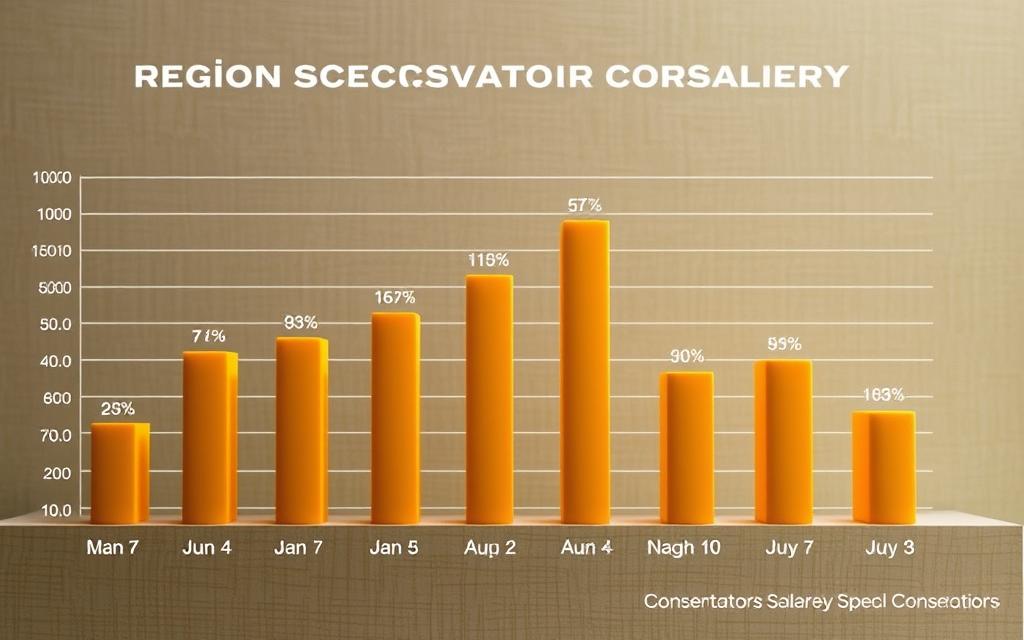
The District of Columbia leads with median earnings of $77,830 per year—nearly double South Dakota’s $31,460 baseline. Coastal states like California and New York offer $61,280-$68,830 annually, reflecting higher living costs and complex asset management demands.
| State | Median Salary | Key Influencers |
|---|---|---|
| District of Columbia | $77,830 | Federal institutions, high-value estates |
| California | $61,280 | Rule 7.756 guidelines, tech wealth |
| South Dakota | $31,460 | Agricultural assets, rural caseloads |
Court policies directly impact these figures. California’s compensation rules consider estate size and community standards, while Massachusetts uses fixed percentage models. Urban professionals often handle international estate components that justify premium rates.
Though not topping national charts, North Carolina remains influential with specialized trust management roles. Its $47,300 average salary demonstrates how mid-tier markets balance affordability and professional growth opportunities.
These regional patterns help conservators strategize career moves. Targeting states with cultural institutions or tech hubs often yields higher compensation, while rural areas provide entry-level experience with simpler cases.
Conclusion
Understanding compensation models helps families and professionals navigate conservatorship responsibilities. Payment structures range from hourly billing to annual salaries, shaped by a conservator’s role and expertise. Geographic location and case complexity further influence earnings, with some states approving rates 40% higher than others.
Family members often manage estates without formal pay, prioritizing care over income. Private companies or professionals typically charge court-approved fees, reducing assets through structured payment plans. Courts maintain strict oversight to ensure funds align with the conservatee’s needs.
Transparency remains critical in this job. Detailed reporting and bonded insurance protect against financial mismanagement. Career growth depends on specialized training and ethical practices, with experienced conservators handling high-value cases.
This information empowers informed decisions when appointing managers or pursuing fiduciary careers. Readers should consult local guidelines and legal experts to address specific scenarios. Reviewing regional salary data and compliance requirements ensures responsible stewardship of vulnerable individuals’ resources.
About the Author