

Are you living with a partner and wondering if you’re legally married without a formal ceremony? Understanding common law marriage requirements can be a complex legal maze that catches many couples by surprise.
Marriage isn’t always about a white dress and wedding bells. In the United States, state laws on common law marriage create unique pathways for couples to establish legal relationships without traditional marriage certificates.
Navigating the complex landscape of state laws common law marriage demands careful attention to specific legal criteria. Each state approaches common law marriage differently. It’s important to understand how to prove common law marriage in your specific jurisdiction.
These common law marriage requirements can significantly impact couples’ legal rights, inheritance, and financial protections. Knowing the nuanced details can mean the difference between recognized legal status and legal challenges.
Key Takeaways
- Common law marriage is not universally recognized across all states
- Legal requirements vary significantly by state
- Proving common law marriage requires substantial evidence
- Cohabitation alone does not guarantee legal marriage status
- Understanding state-specific laws is key for couples
Introduction to Common Law Marriage
Common law marriage is a special legal status for unmarried couples in the U.S. It lets couples have marital rights without a wedding. It’s important for couples to know about common law marriage in the USA.
This idea comes from old American laws. Not every state accepts common law marriage. So, knowing your state’s rules is key.
Definition of Common Law Marriage
A common law marriage happens when couples live together like they’re married. They don’t get a marriage license. To prove they’re in a common law marriage, couples need to show:
- Mutual intent to be married
- Shared living arrangements
- Public representation as a married couple
Historical Context
Legal recognition of unmarried couples has changed a lot. Back then, common law marriages helped couples in rural areas. Now, only a few states allow it.
Importance of Understanding Requirements
Understanding common law marriage laws is important. Couples need to know their rights and responsibilities. This helps them make smart choices about their relationship and legal status.
States that Recognize Common Law Marriage
Marriage without a license is tricky. Not all states say yes to common law marriages. The rights for common law marriage change a lot from place to place.
The list of states that accept common law marriage keeps changing. Right now, only a few states really get this special kind of partnership.
Overview of Recognizing States
By 2023, only a few states fully accept common law marriages:
- Colorado
- Iowa
- Kansas
- Montana
- New Hampshire (for inheritance purposes only)
- Texas
- Utah
Recent Legislative Changes
State laws about marriage without a license have changed a lot. Some states that used to accept common law marriages now don’t anymore.
Important things to know about common law marriage rights include:
- Proof of wanting to be married
- Living together all the time
- Being seen as a married couple
Couples should always check the latest local laws. Laws can change fast.
Key Requirements for Common Law Marriage
Getting a common law marriage is more than just living together. It needs specific things that go beyond just living as a couple. Knowing these key things is very important for couples wanting property rights.
Cohabitation Criteria
Cohabitation is more than just living together. It’s about showing you’re a real couple. The legal rules for living together include:
- Living together all the time
- Sharing money and bills
- Being committed for a long time
- Acting like a married couple
Intent to Be Married
The most important thing in a common law marriage is wanting to be married. Courts look at how you act in public. This means:
- Using the same last name
- Filing taxes together
- Calling each other spouse
- Sharing bank accounts
Mutual Agreement and Consent
Both people must agree to be in the relationship. When a common law marriage ends, courts check if both agreed. They look at:
| Requirement | Legal Significance |
|---|---|
| Cohabitation | Shows a strong partnership |
| Public Representation | Shows you want to be married |
| Mutual Consent | Makes the relationship real |
Understanding common law marriage needs careful planning and a real commitment to a shared life.
Duration of Cohabitation
It’s important for couples to know how long they need to live together for a common law marriage. Each state has its own rules about when a couple is seen as married.

The time needed to be considered married varies a lot. Some places need a long time together. Others look at if the couple acts like they’re married.
Minimum Timeframe Requirements
Important things to think about for common law marriage include:
- Living together for a certain amount of time
- Being seen as a married couple in public
- Sharing money and bills together
State-Specific Variations
States have different rules for common law divorce rights. Some need:
- At least 2-3 years of living together
- Sharing money and property
- Showing they want to be married
Impact of Short-Term Cohabitation
Short-term relationships usually don’t get the same rights as married couples. Courts look at how deep the relationship is, not just where they live.
Legal experts say to keep records of shared money, property, and promises to help prove a common law marriage.
Age Requirements for Common Law Marriage
Understanding age rules for common law marriage can be tricky. Each state has its own rules. These rules affect who can be in a common law marriage.
It’s important to know the age limits for common law marriage. Unlike regular marriage, common law has more legal details.
Minimum Age Restrictions Across States
States have set age rules for common law marriage:
- Most states say you must be 18 to get married this way.
- Some places let you marry at 16 with your parents’ okay.
- Other areas need a judge’s okay for young marriages.
Age Implications in Common Law Marriages
Age can change things in a common law marriage. You need to think about:
- If you can legally agree to marry.
- Any problems that might make your marriage not recognized.
- How you’ll handle money and who gets what when you split up.
Legal experts say making a detailed agreement is key. It helps protect both sides, no matter the age.
Couples should check their state’s laws. This makes sure they can legally be in a common law marriage.
Legal Benefits of Common Law Marriage
Common law marriage has many legal benefits. It gives unmarried partners many rights like traditional marriage. But, you don’t need a formal ceremony.
Unmarried partners in common law marriages get important protections. It’s key to know these rights for good legal planning.
Spousal Rights and Protections
Common law marriages give couples big legal benefits. They include:
- Healthcare decision-making rights
- Property ownership and inheritance
- Insurance coverage eligibility
- Social security and pension benefits
Inheritance Considerations
Common law spouses can inherit like married couples. They get:
- Inheriting property without a will
- Claiming estate tax exemptions
- Receiving survivor benefits
Tax Benefits
Common law couples can get big tax breaks. They might get:
| Tax Benefit | Potential Advantage |
|---|---|
| Joint Filing | Potential lower tax brackets |
| Deduction Sharing | Maximize tax credits |
| Estate Tax Exemptions | Reduced tax liability |
Note: Legal benefits vary by state and require specific documentation to validate the common law marriage status.
How to Establish a Common Law Marriage
To start a common law marriage, you need to document everything well. You must know the laws in your state. It’s about showing you really care and meet legal rules.
For common law spouse rights, gather proof of your partnership. Here are steps to help:
- Live together all the time
- Act like a married couple in public
- Have joint bank accounts
- Use the same last name
- File taxes together
Creating a Cohabitation Agreement
A cohabitation agreement is key for common law marriage. It should cover:
- How you’ll share money
- Who owns what
- What you both expect from each other
- How to end the marriage
Evidence to Support Your Claim
| Type of Evidence | Documentation Example |
|---|---|
| Financial Proof | Joint bank accounts, shared credit cards |
| Residential Evidence | Utility bills with both names, lease agreements |
| Personal Documentation | Insurance policies, emergency contact forms |
Legal Steps to Formalize
To protect your rights, document your relationship well. Get help from a lawyer who knows the local laws. Each state has its own rules for common law marriages.
Common Law Marriage vs. Traditional Marriage
Marriage laws can be tricky, even more so when comparing common law to traditional marriage in the U.S. States have different rules for common law marriages. This makes it hard for unmarried couples to know their legal rights.
Common law marriage and traditional marriage are different in how they start and are proven. Traditional marriages need a formal ceremony and a license. But common law marriage in the U.S. accepts unions that meet certain legal standards without a wedding.
Key Differences in Marriage Formation
- Traditional marriages require official documentation
- Common law marriages rely on demonstrable relationship evidence
- Legal recognition depends on state-specific requirements
Shared Legal Rights and Responsibilities
Both marriage types offer similar legal protections. Couples in common law marriages get the same rights as those in traditional marriages. These rights include:
- Property ownership
- Inheritance
- Medical decision-making
- Tax filing status
The key to legal recognition for unmarried couples is showing clear proof of their commitment and intent to be married under state law.
Common Misconceptions About Common Law Marriage
Understanding common law marriage can be tricky because of many myths. People often think living together means they are married. But, it’s not that simple when you try to prove common law marriage.
There are many myths that confuse couples about marriage without a license:
- Living together for a specific number of years guarantees marriage status
- Verbal agreements are sufficient to establish a common law marriage
- Common law marriage is recognized in all states
Debunking Critical Misconceptions
Proving common law cohabitation is more than just living together. Couples need to show they want to be married, agree on it, and meet certain legal rules that change by state.
Real-Life Legal Insights
Courts look at many things when deciding on common law marriage claims. Mere cohabitation does not automatically create a legal marriage. Couples need strong proof of their commitment, like:
- Joint financial accounts
- Shared property ownership
- Being seen as a married couple
- Showing they both want to be married
Legal experts say it’s key to know the rules of each state to avoid problems in proving common law marriage.
Enforcing Common Law Marriage Rights
Understanding rights in common law marriage can be hard. Couples facing problems need to know their legal options. This helps protect their interests when disagreements happen.

When issues come up in a common law marriage, there are important steps. These steps help keep individual property rights safe. They also make sure everyone is treated fairly.
Identifying Legal Challenges
Property rights can be a big issue when common law marriages end. Couples should get ready to show their shared life and money ties.
- Gather evidence of relationship commitment
- Collect financial documentation
- Maintain records of joint assets
- Document shared living arrangements
Seeking Legal Recourse
When a common law marriage ends, getting legal help is key. Lawyers can guide through dividing property and ending the relationship.
| Legal Action | Key Considerations |
|---|---|
| Property Division | Prove joint ownership and contribution |
| Spousal Support | Demonstrate financial interdependence |
| Asset Protection | Establish individual and shared property claims |
Documentation and Evidence
Proving a common law marriage needs comprehensive documentation. Couples should keep records like:
- Joint bank account statements
- Shared utility bills
- Mutual insurance policies
- Correspondence showing commitment
Knowing your rights in common law marriage helps protect your interests. This is important during legal disputes.
Impact of Divorce on Common Law Marriage
Ending a common law marriage is complex. It’s different from a regular divorce. Couples face unique challenges, like rights and money issues.
Understanding the legal side of ending a common law marriage is key. You need to look at several important points:
- Proving the existence of a valid common law marriage
- Establishing financial rights common law partners possess
- Navigating property division and asset distribution
Legal Process for Dissolution
The legal process to end a common law marriage is similar to a regular divorce. You must show you were in a legally recognized relationship. This can include:
- Joint financial accounts
- Shared property ownership
- Public representation as a married couple
Division of Property and Assets
Dividing property in a common law marriage can be tricky. Courts look at several things:
| Consideration | Key Factors |
|---|---|
| Asset Ownership | Individual and joint property contributions |
| Financial Contributions | Income, investments, and shared expenses |
| Duration of Relationship | Length of cohabitation and partnership |
If you want to end your common law marriage, talk to a lawyer. They know about financial rights common law. This helps make sure everything is fair and settled.
State-Specific Common Law Marriage Requirements
Understanding common law marriage can be tricky. Each state has its own rules. It’s key for couples to know these rules to get their relationship legally recognized.
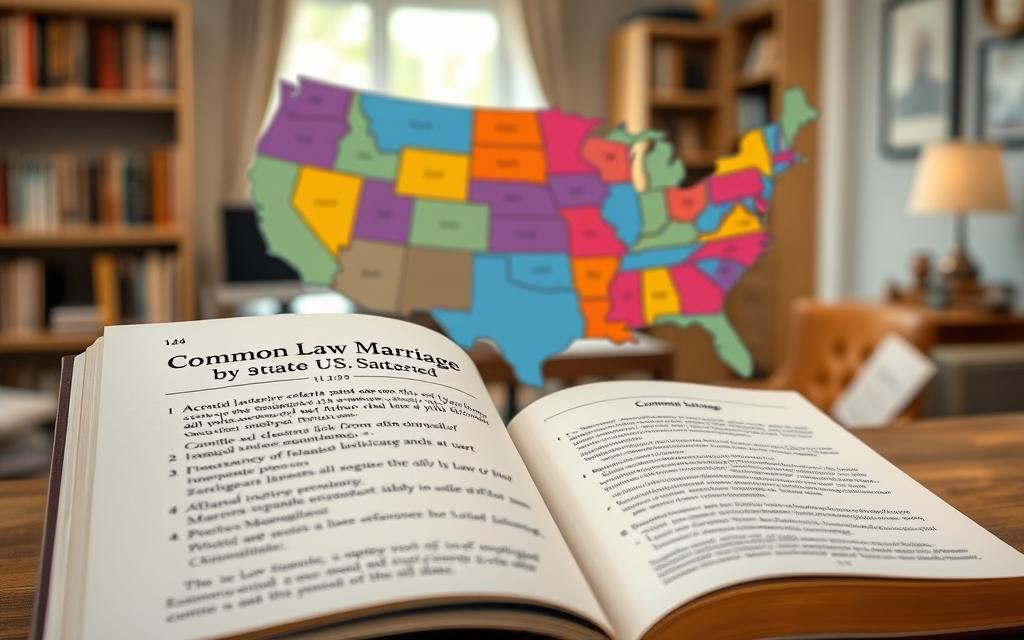
Every state has its own way of handling common law marriage. It’s important to know the rules in your state. Some states recognize common law marriage, while others don’t.
Texas: Key Criteria for Common Law Marriage
Texas has clear rules for common law marriage. Couples need to meet three main points:
- Live together as partners
- Present themselves as a married couple to others
- Agree to be married
Colorado: Unique Aspects of Common Law Recognition
Colorado has special rules for common law marriage. Couples must show:
- Mutual consent to be married
- Continuous cohabitation
- Public representation as a married couple
Illinois: Important Legal Considerations
Illinois has a special rule. It doesn’t allow new common law marriages but will recognize old ones before a certain date.
Couples should check their state’s rules. This helps them understand their rights and legal status under common law marriage.
Changing Status from Common Law to Legal Marriage
Couples in long-term relationships often want legal recognition. Moving from a no ceremony marriage to a formal one brings big benefits. It helps unmarried partners get more rights.
To change a common law marriage to a legal one, follow these steps. Make sure to go through the registration process well. This ensures you get all the legal protection you need.
Steps to Formal Registration
Getting a legal marriage needs careful planning:
- Gather necessary identification documents
- Visit local county clerk’s office
- Complete marriage license application
- Pay required registration fees
- Schedule an official marriage ceremony
Benefits of Legalizing Your Partnership
Getting married formally has many benefits:
- Enhanced legal recognition everywhere
- Easier proof of being married
- More spousal benefits
- Smarter estate planning
- Clearer inheritance rights
Even if not needed in some states, getting legally married adds security. It makes your partnership status clear and strong.
Common Law Marriage and Domestic Partnerships
It can be hard to understand the laws for unmarried couples. Laws about unmarried couples vary a lot by state. Domestic partnerships and common law marriages are two ways to get some of the rights of marriage.
There are big differences between domestic partnerships and common law marriages. These differences are important:
- Legal benefits of common law marriages are different from domestic partnerships
- States treat these relationships very differently
- How to start each relationship is different
Fundamental Differences
Domestic partnerships need to be registered with local authorities. Common law marriages start with long-term living together and commitment. How much legal protection unmarried couples get depends on their state’s laws.
State-by-State Acceptance
Not all states treat these relationships the same. Some states don’t allow common law marriages anymore. Others do, giving couples other options.
- California has strong rights for domestic partners
- Colorado has some rights for common law marriages
- New York has special rules for registered partners
Legal Implications
Couples need to know their state’s laws well. This includes rights like who gets what in an inheritance, making health decisions, and owning property. Getting advice from a lawyer can help protect your rights.
Conclusion: Navigating Common Law Marriage Requirements
Understanding common law marriage rules can be tricky. Each state has its own rules. Couples need to know what their state says about unmarried couples.
To prove a common law marriage, you need to show a few things. These are mutual intent, living together, and acting like a married couple. Not all states have the same rules for this.
Essential Insights for Couples
Dealing with common law marriage laws needs careful thought. Couples should keep records of their life together. They should also talk to a lawyer to know their rights.
Resources for Further Exploration
For more info, check out state bar associations and family law lawyers. Also, look at official state websites. These places have the latest on common law marriage rules. They help couples understand their legal rights.
About the Author